In short.
Collabase Test Management is the test management of the Swiss platform Collabase. Test cases, runs, defects and requirements sit in one data set, and requirement coverage is maintained automatically. The basis is the QualityTree framework with eight disciplines and ninety practices.
One system
Test cases, runs, defects, requirements and projects in one data set
Coverage in sight
Requirement coverage is kept up to date automatically, without manual mapping
No extra subscription
Test Management is part of the product, not an add-on per user
Existing test cases carry over
Test cases and suites from Xray, TestRail or Zephyr can be imported
When quality fails at tool boundaries.
Test cases live in the QA tool, requirements in the wiki, defects in the ticket system, status reports in a spreadsheet. At release time nobody is sure which requirement is actually covered. Test Management closes that gap by creating test cases, runs and defects in the same system as the project.
At a release you cannot say at the press of a button which requirements have been tested.
Defects from the QA tool are copied into the ticket system by hand, with delay and transfer errors.
Add-on licences for test tools add up to a five-figure amount per year.
What you gain.
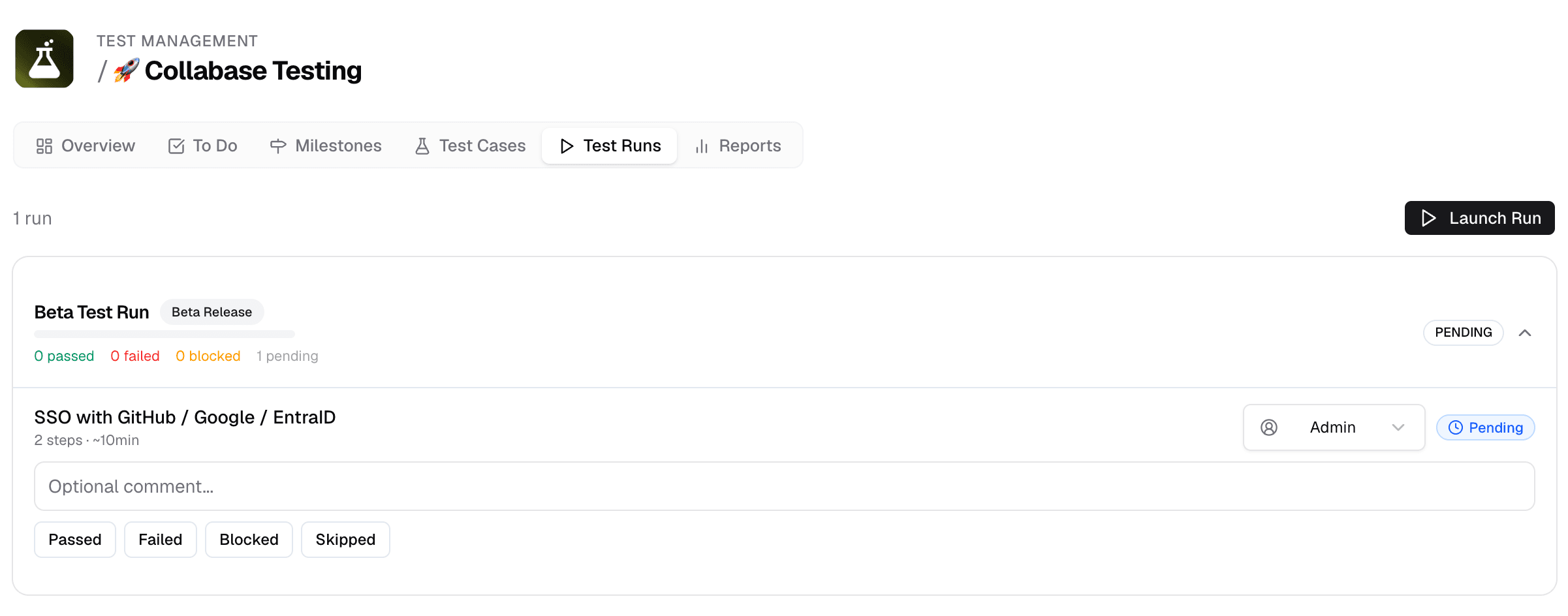
Test runs in the context of the project
Runs start in the same project that holds the requirements. Testers see the requirement text next to the test step, and a defect becomes a task in the same project.
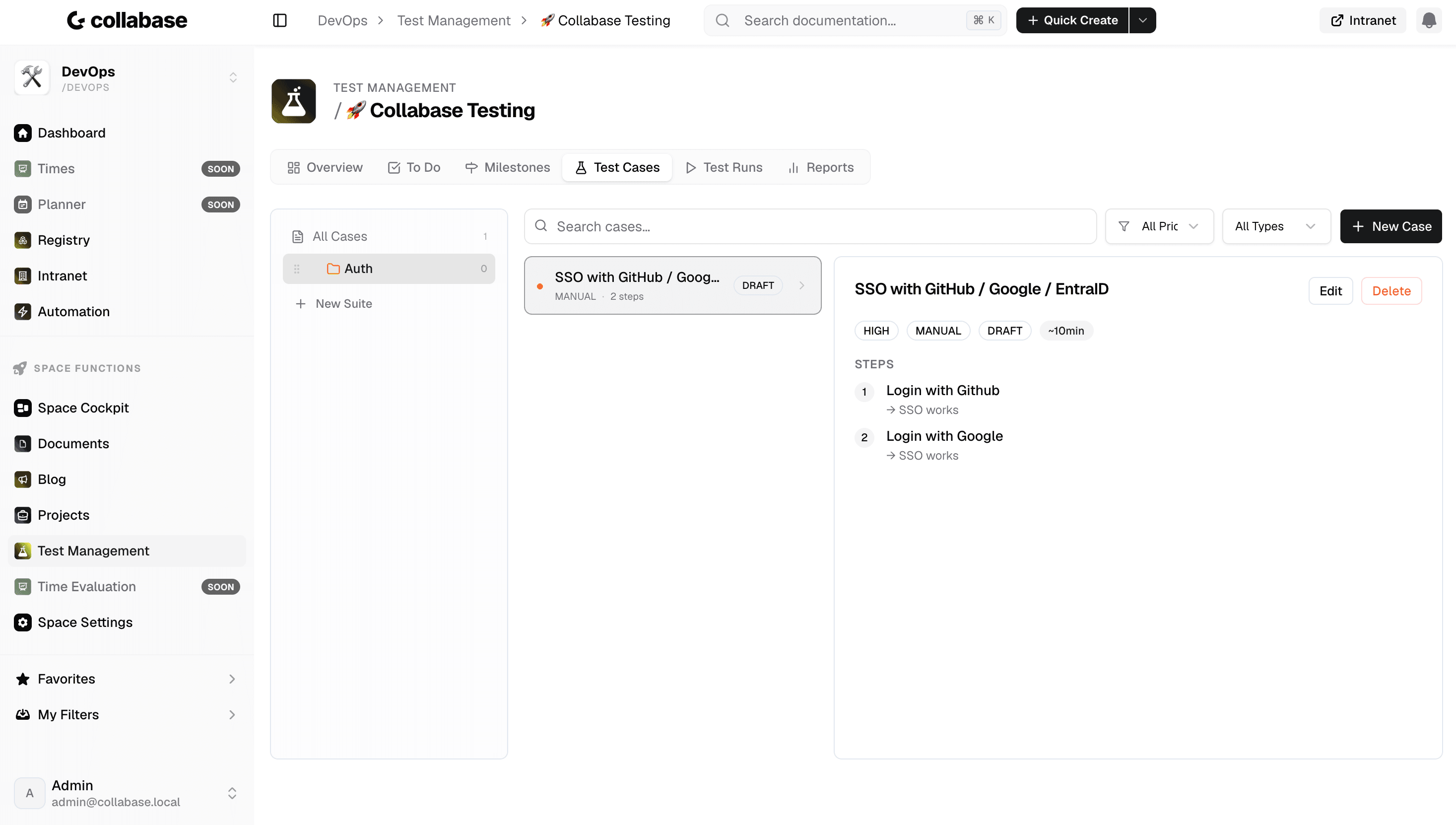
Structured test cases you reuse
Test cases are organised hierarchically in suites. Steps, preconditions and expected results can be reused across test cases, so identical checks are maintained once.
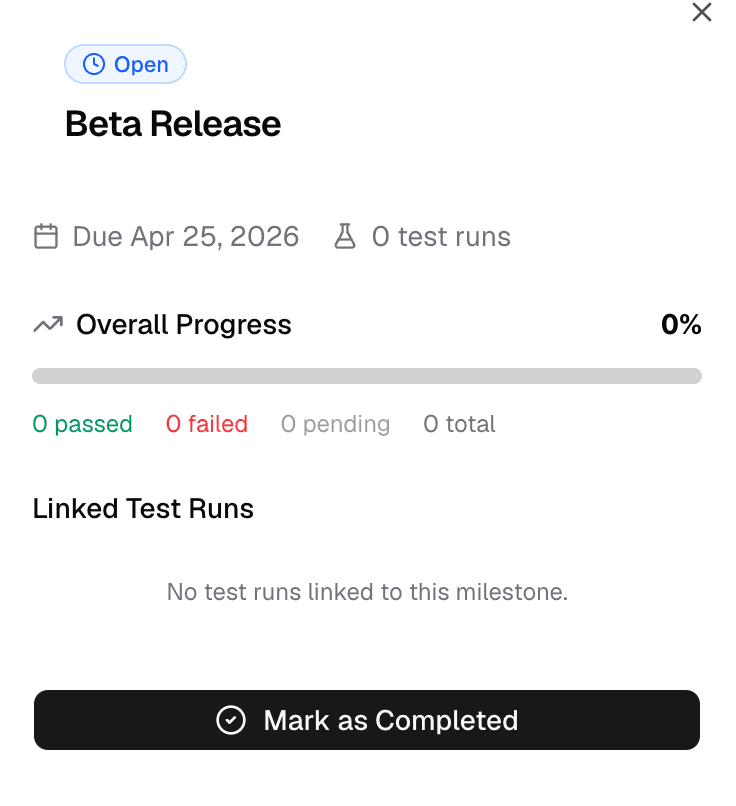
Coverage and release readiness at a glance
Requirements are linked to test cases. The dashboard shows per release which requirements are covered, what is open and which defects are critical.
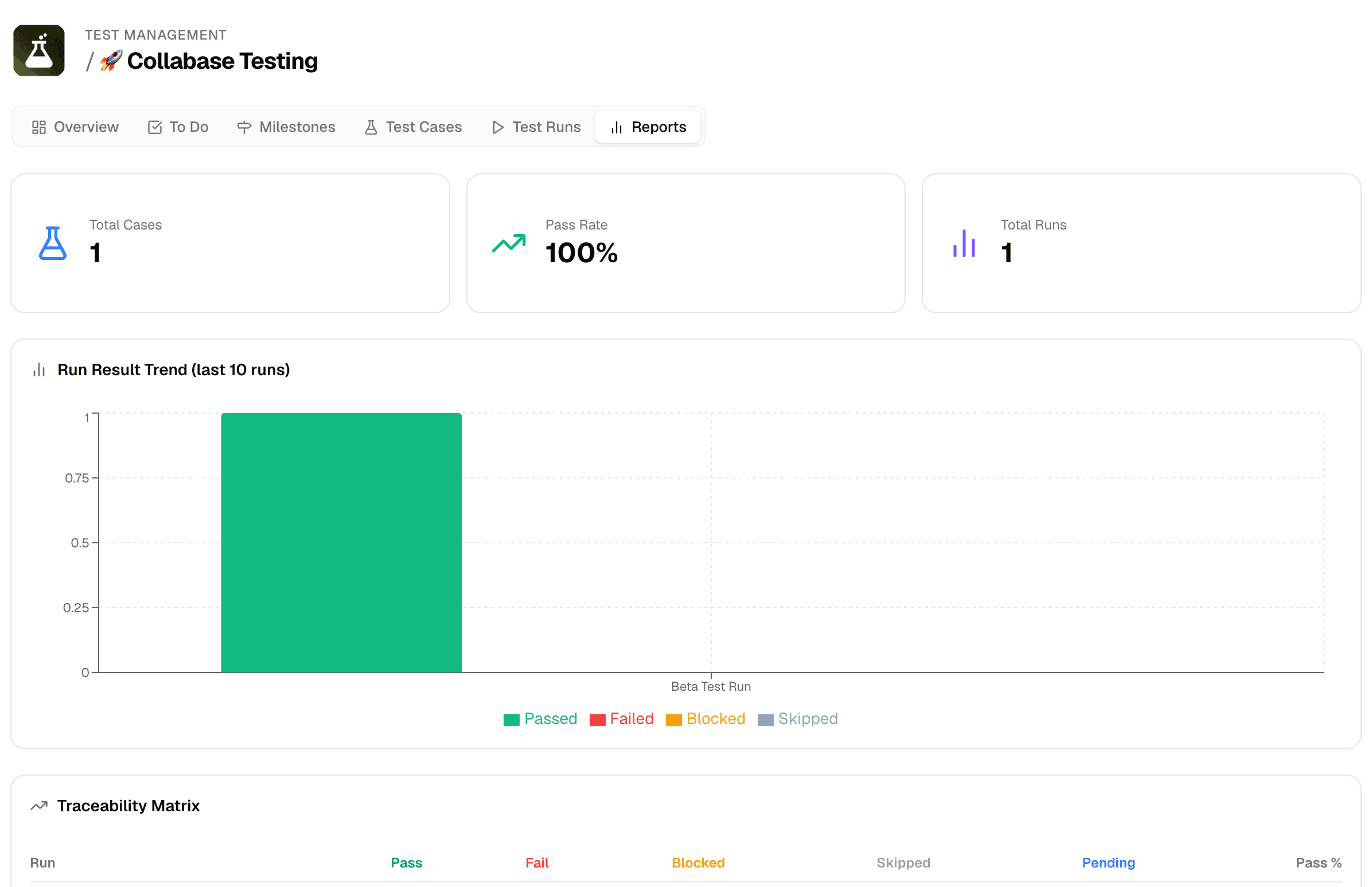
Reports for audits and management
Coverage, defect rates and trend curves as PDF. For ISO audits, management reviews and customer acceptance, without anyone assembling the numbers by hand.
Where it pays off.
Software development
Test runs alongside the sprint, regression suites, connected to automation.
Regulated environment
ISO 27001, ICS and GxP: traceable test evidence for audits.
Service desk
Change testing before deployment, documented release checks.
Customer acceptance
Acceptance documentation straight from the system instead of spreadsheet folders.
Test Management is one app of seven.
Test cases point to requirements in Docs, defects become tasks in Projects, recurring test runs are started by the Automation Engine. Every app shares login, permissions and data. One contract, one deployment, one contact.

Docs

Projects

Intranet

Registry

Test Management

Automation

Time
Operations and data sovereignty.
Where the data sits is decided by the operating model, not by the small print.
Swiss hosted
Operated on Swiss public cloud at Infomaniak, one isolated environment per customer. Content is processed in Switzerland only, apart from the upstream web application firewall.
Self-hosted
Runs on your own infrastructure. Full control over the data, no access from outside.
revFADP & GDPR
Data processing agreement included. Compliant with the revised Swiss data protection act and the GDPR.
One product, all apps.
Collabase Enterprise
On request
Staged by user count
Test Management is part of the Enterprise plan. All seven apps, no add-ons.
Questions from first conversations.
Test Management in practice: what comes up most often in a first conversation.
Do we have to map test cases to requirements by hand?
No. Requirement coverage is maintained automatically because test cases, runs, defects and requirements sit in the same data set. A separate mapping step is unnecessary.
Can test cases be brought over from Xray, TestRail or Zephyr?
Yes. Test cases and suites from those systems can be imported along with their hierarchy. Existing test work does not have to be rewritten.
What does the QualityTree framework have to do with it?
Collabase integrates QualityTree natively, a structured model for software quality with eight disciplines and ninety practices. Test management is the part of it that becomes visible in daily work.
How do we evidence quality to an auditor?
Through runs with a result and a timestamp, linked defects, and requirement coverage. Because all of it sits in one place, the evidence comes out of the work rather than a retrospective exercise.
Try Test Management on a real release.
In the proof of concept we set up Test Management for one of your projects, including the import of existing test cases from Xray or TestRail.